22-carat gold foil
For the raised gold work.
price
Materials & Craft
The materials Anu uses, how each layer is made, and the materials and framing she can supply.
A Tanjore painting is built in layers: a hand-prepared board, raised relief work, real gold and stones, and colour. Anu follows the complete traditional process, from preparing the board to the final gold, using 22-carat gold foil, natural pigments, embossed gesso work and semi-precious stones.
Here is what goes into each layer, and the materials Anu can supply if you would like to paint your own.
The board
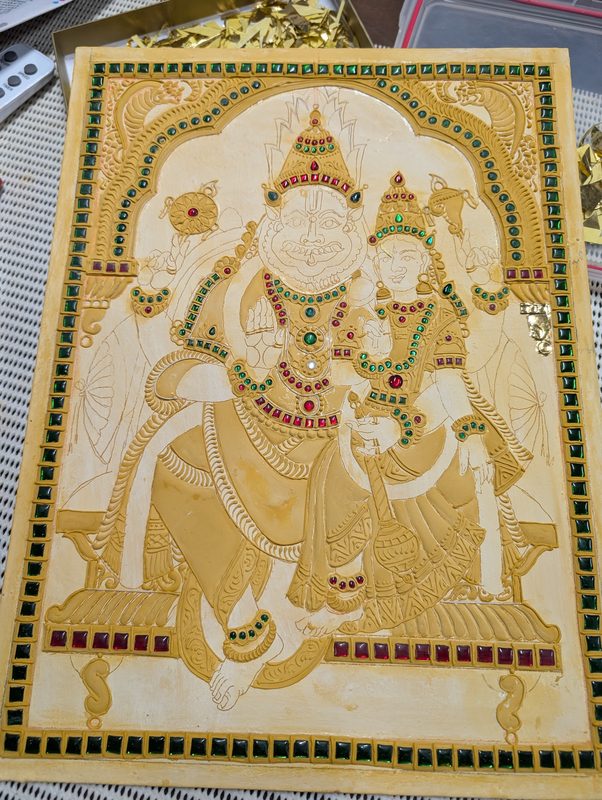
Traditionally, cloth is pasted onto a wooden plank, often jackfruit or teak, with Arabic gum; today plywood is common. The cloth is coated with a paste of chalk or powdered limestone and a binder, then dried and smoothed to a fine surface ready for drawing.
Anu prepares her boards herself as part of the full traditional process.
Embossing
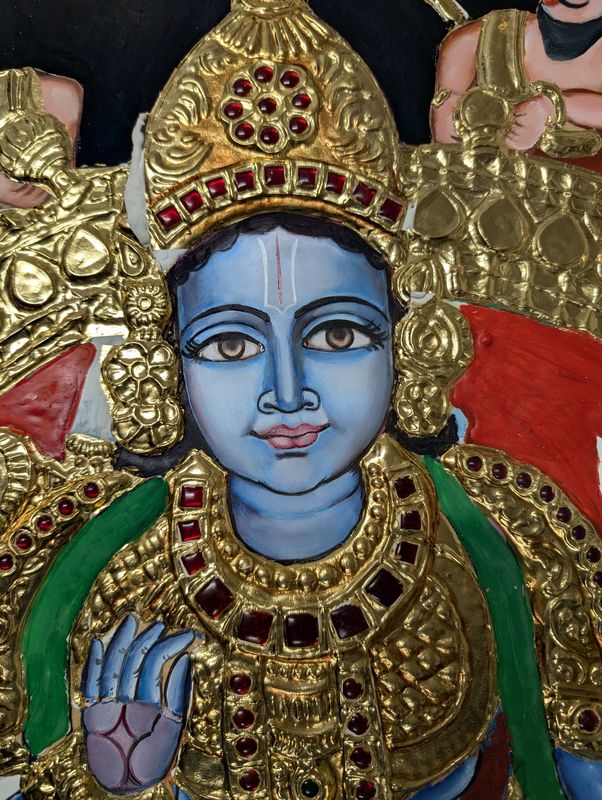
The three-dimensional look of a Tanjore painting comes from gesso work: a paste of limestone or chalk powder and a binder, traditionally called sukkan or makku, built up in high relief for crowns, jewellery, pillars, arches and thrones. Each layer is shaped by hand and left to dry before the gold goes on.
Gold
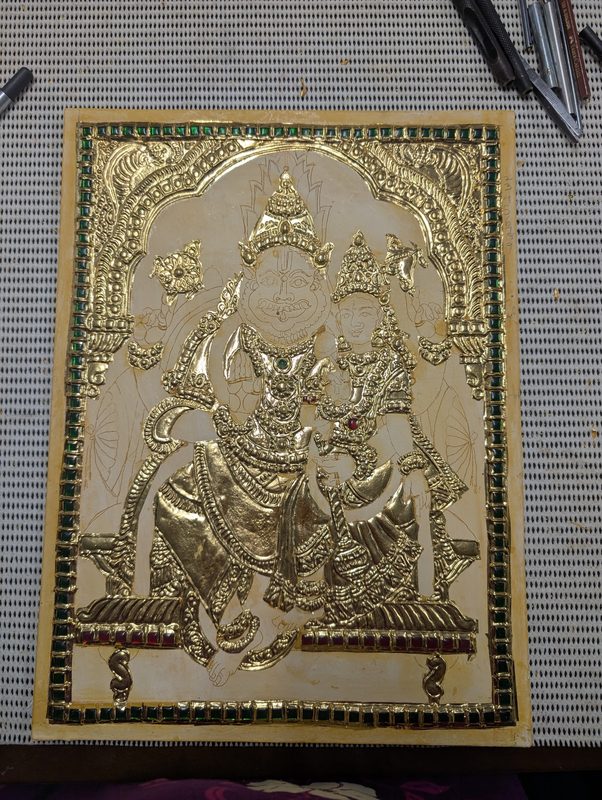
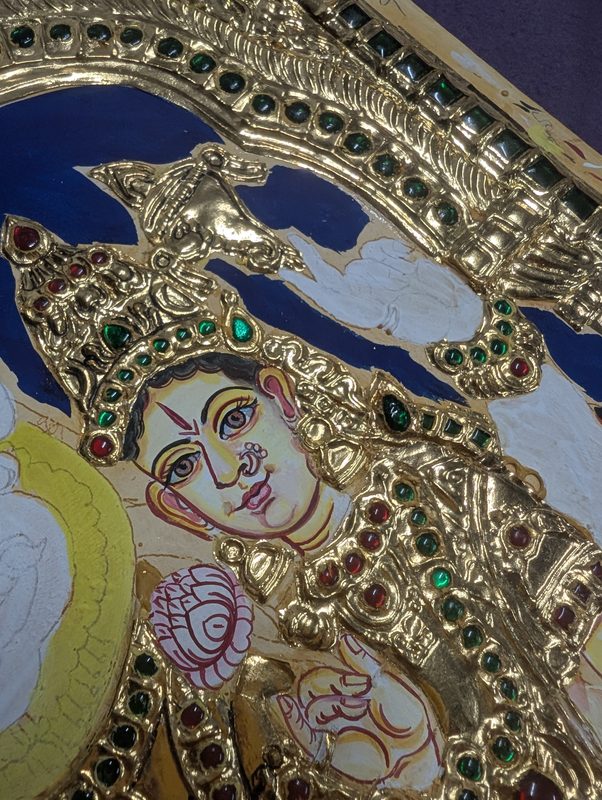
Anu uses 22-carat gold foil, pressed carefully over every raised detail: the pillars, arches, thrones, garments and jewellery of the figures. Genuine gold foil is one of the marks of an authentic Tanjore painting, and it is what gives the work its glow in soft light.
Stones
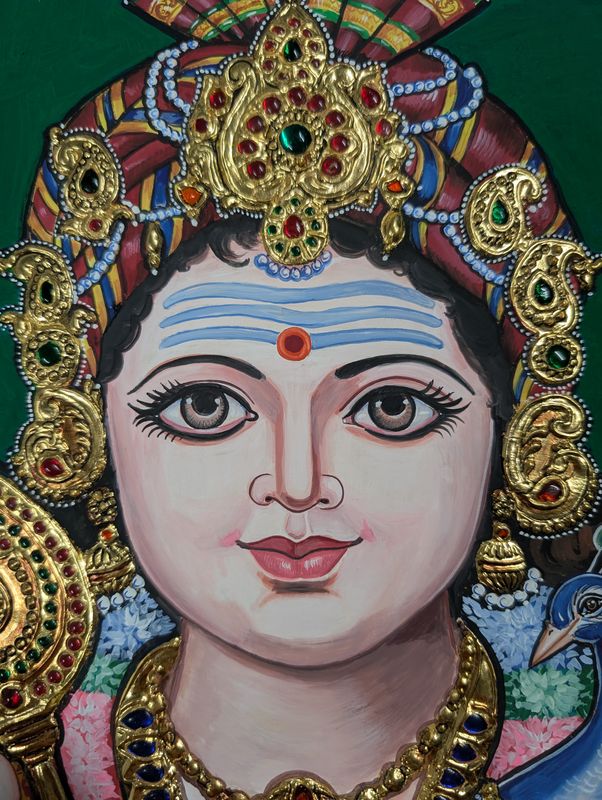
Traditional Tanjore paintings are inlaid with glass beads and, at times, precious or semi-precious stones. Anu sets semi-precious stones into the relief to bring out crowns, necklaces and ornaments, chosen to suit the colours of each painting.
Colour
Historically, Tanjore artists painted with natural vegetable and mineral dyes, with rich reds, blues and greens and dark outlines. Anu works with natural pigments, painting the faces, skin and backgrounds by hand once the gold is in place.
Framing
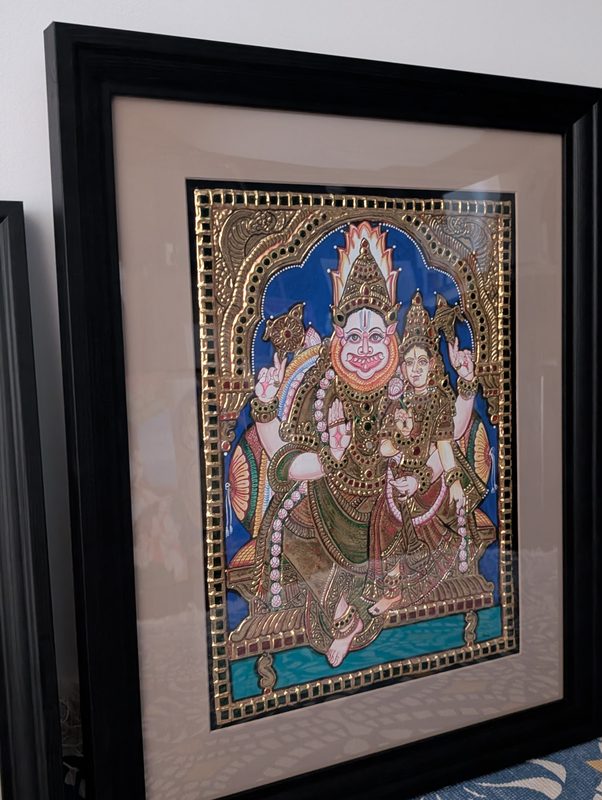
Tanjore paintings were traditionally framed to hang in puja rooms and halls. Anu offers both traditional frames and custom framing, so each painting can be finished to suit the artwork and the space it will live in.
From Anu's studio
Painting your own Tanjore artwork? Anu can supply the materials she uses herself.
For the raised gold work.
price
Semi-precious stones for crowns, jewellery and ornaments.
price
Hand-prepared boards, ready for drawing and relief work.
sizes and prices
Material for building the raised gesso relief.
price
Framing made to measure for your painting.
how quotes work
Frames in the traditional style for Tanjore paintings.
styles and prices
Want to learn to use these materials? See the Tanjore painting process taught in Anu's classes. General history of the art form: Thanjavur painting.
Anu would love to hear from you.